|
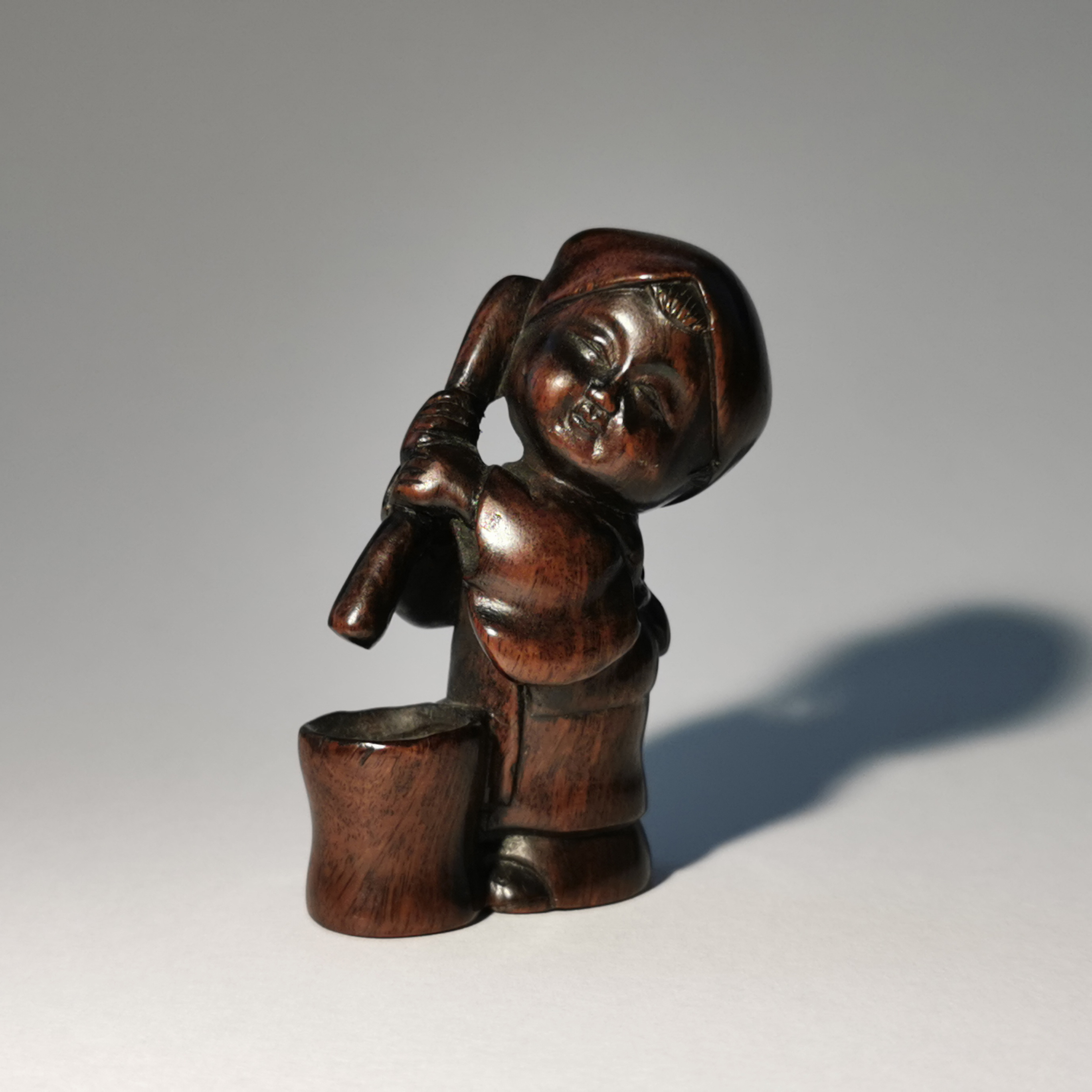
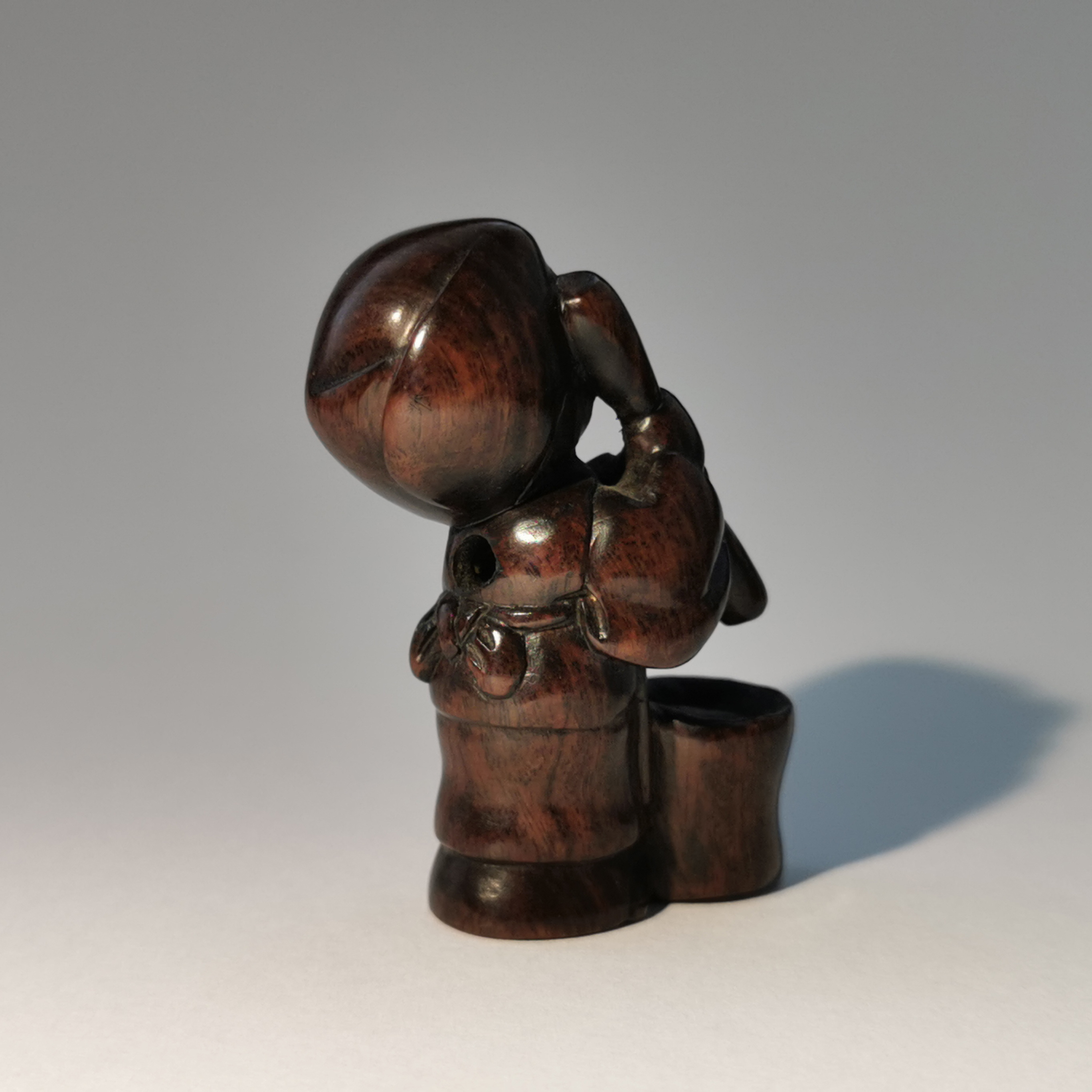
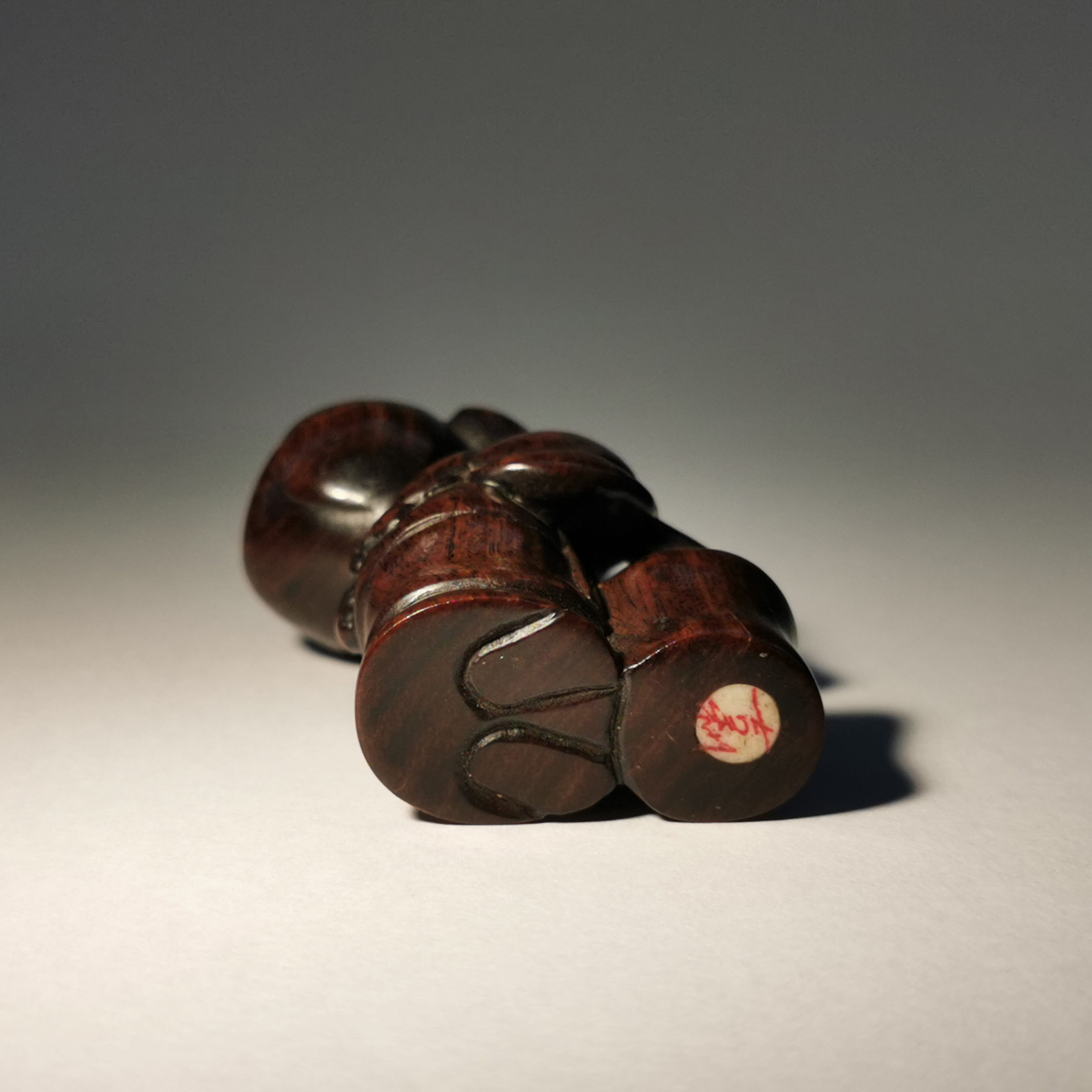
A carved wood netsuke figure, Edo period (19th century), signed.
These ornately carved toggles were once an integral part of Japanese fashion. Netsuke (根付) were originally practical items—toggles used to fasten small pouches (inro) to the obi sash of kimono-wearing men during the Edo period (1603–1868). However, over time they evolved into miniature masterpieces of carving, often imbued with allegorical or humorous themes.
Condition: Fine. No damage or repair.
Dimensions: Height: 5cm.
Provenance: Ex. Private collection, Hampshire, UK.
P.O.A.
Japanese netsuke are miniature, intricately carved sculptures that served a vital practical purpose in traditional Japanese fashion. During the Edo period (1603–1867), traditional clothing like the kimono had no pockets. To carry personal items such as medicine, tobacco, or money, Japanese men hung small containers called sagemono or inro from their kimono sashes (obi). The netsuke acted as a toggle or stopper, slipped above the sash to prevent the cords of the containers from slipping through.
What began as a purely utilitarian object quickly evolved into a highly sophisticated art form. Early netsuke were often simple pieces of wood or natural gourds, but as demand grew, skilled artisans began carving them from a variety of premium materials, most notably boxwood and ivory. The craft required immense skill, as the objects needed to be compact, lightweight, and completely smooth. Any sharp edges could snag and ruin the delicate silk of the wearer's kimono.
The subject matter of netsuke was incredibly diverse, capturing the essence of Japanese culture, folklore, and daily life. Carvers depicted everything from legendary deities and mythical creatures like dragons and kappa, to realistic animals, everyday citizens, and historical figures. Because netsuke were worn by men from various social classes, they also served as a subtle form of self-expression and status. A well-crafted or humorous netsuke allowed the wearer to showcase their wealth, taste, and intellect in a society with strict dress codes.
With the dawn of the Meiji Restoration in 1868, Western fashion flooded Japan, and the traditional kimono fell out of daily use, causing the practical demand for netsuke to plummet. However, the art form did not vanish. Western collectors and travelers visiting the newly opened country fell in love with the exquisite craftsmanship of these miniature sculptures. Today, historic netsuke are highly prized by museums and private collectors worldwide, while a dedicated group of contemporary carvers continues to keep this unique artistic tradition alive.
© Minerva Antiquities 2026 All rights reserved
Powered by w3.css