|
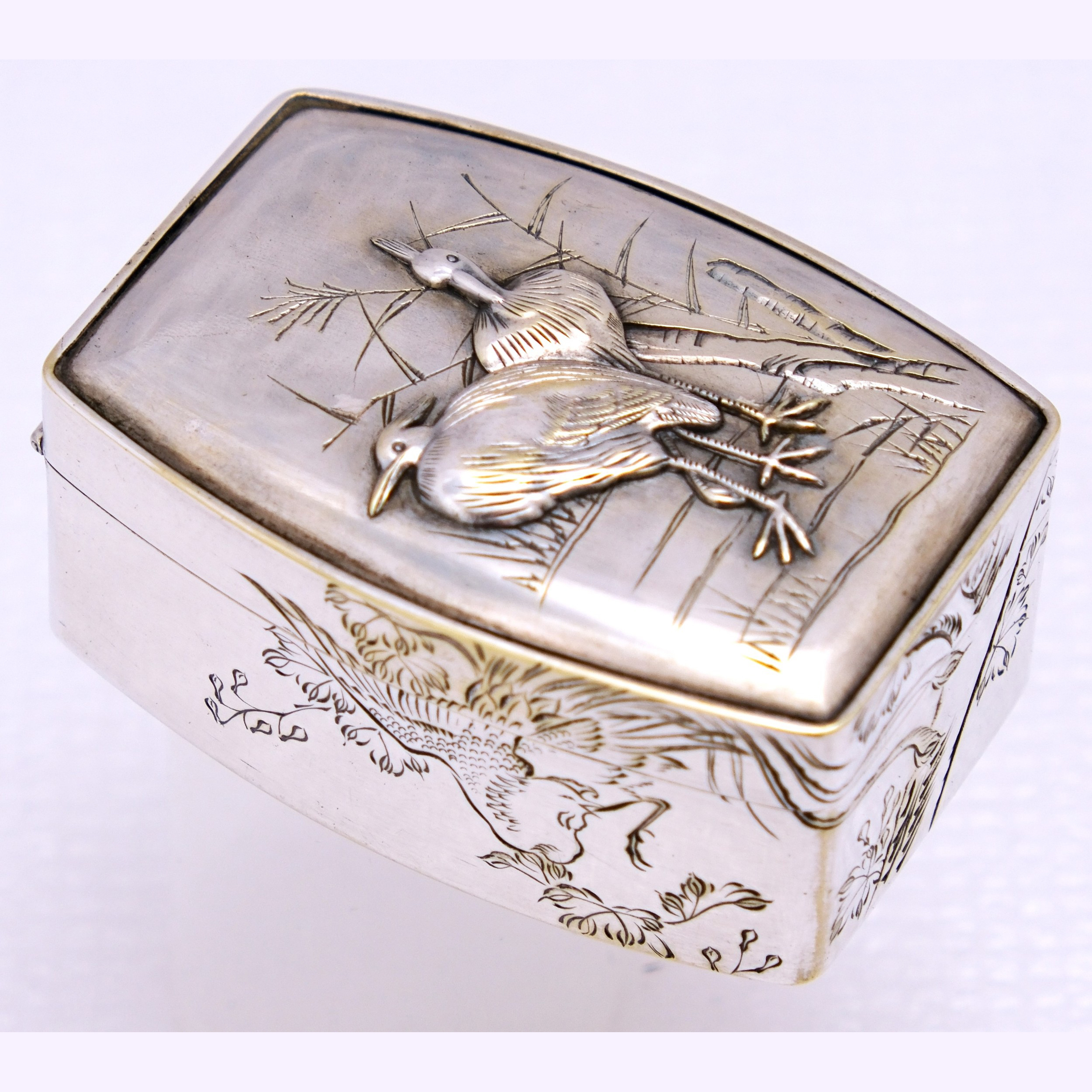
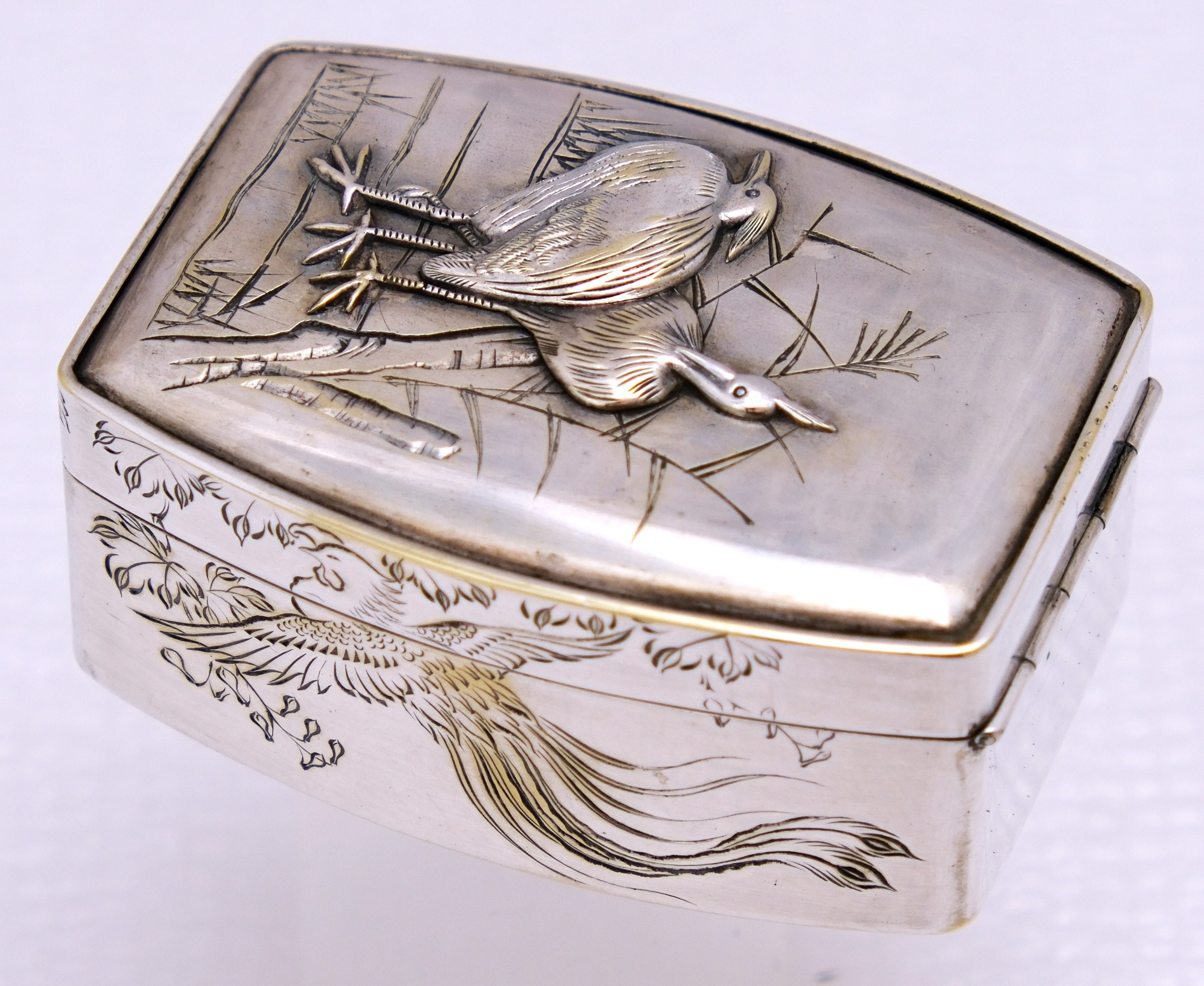
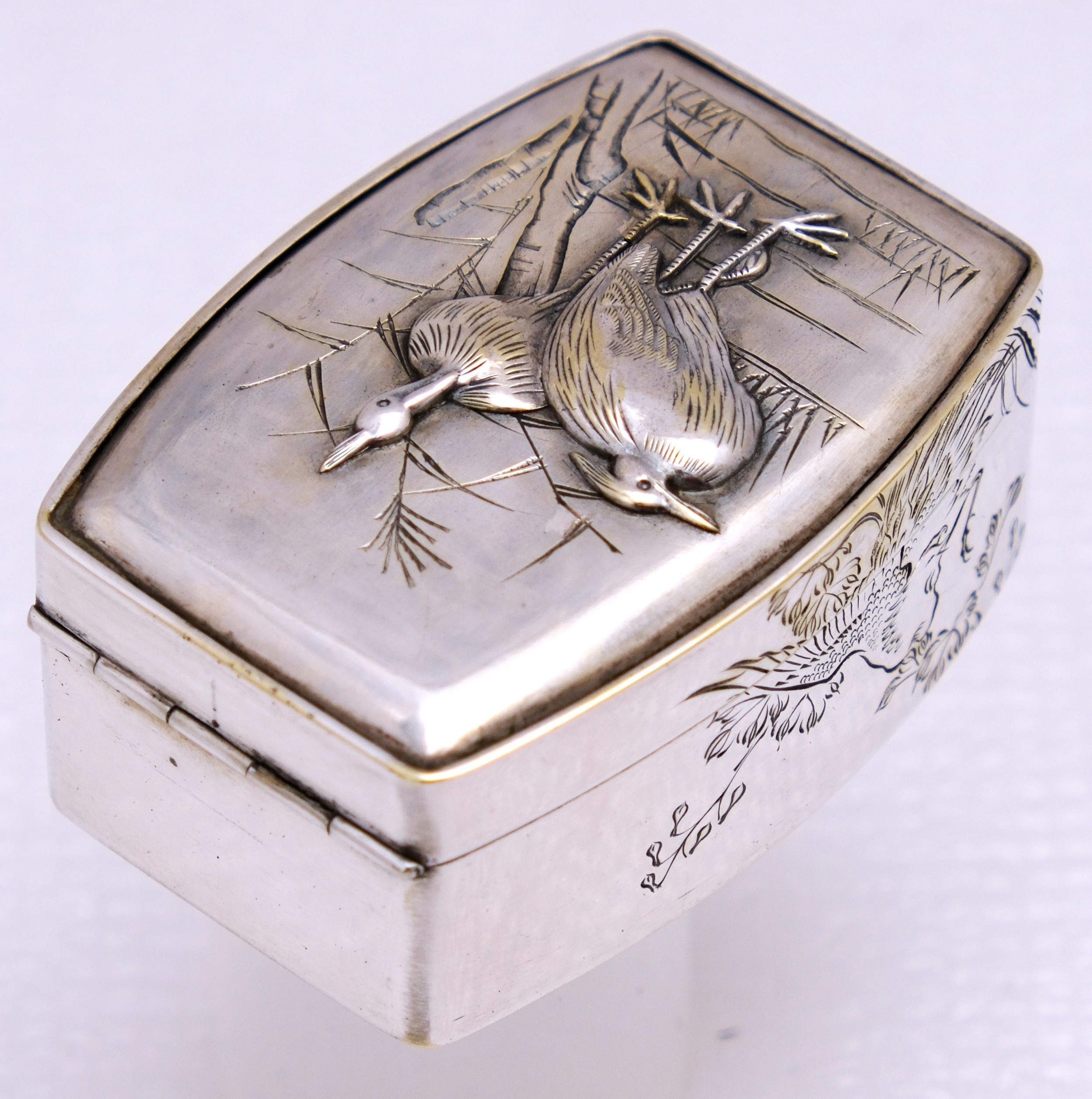
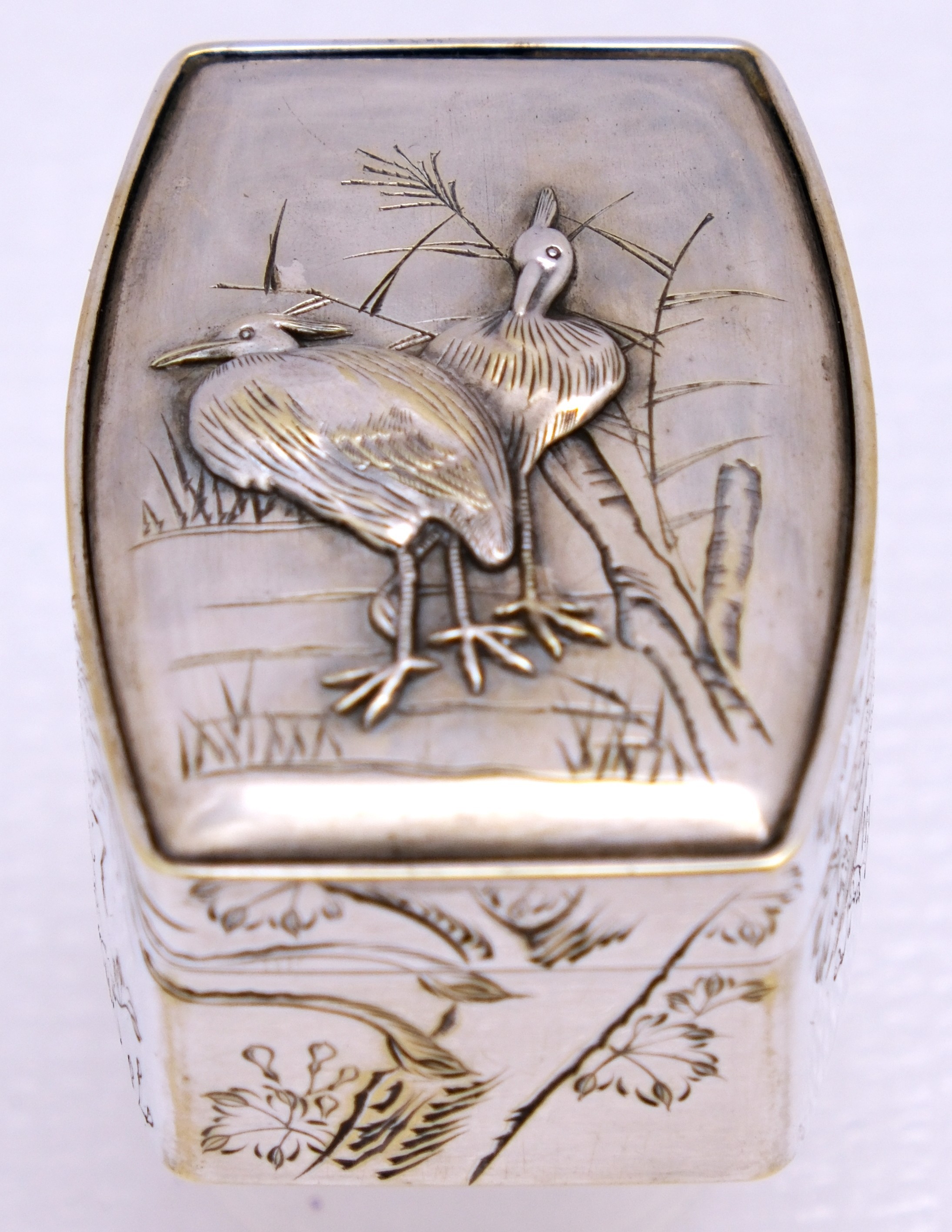
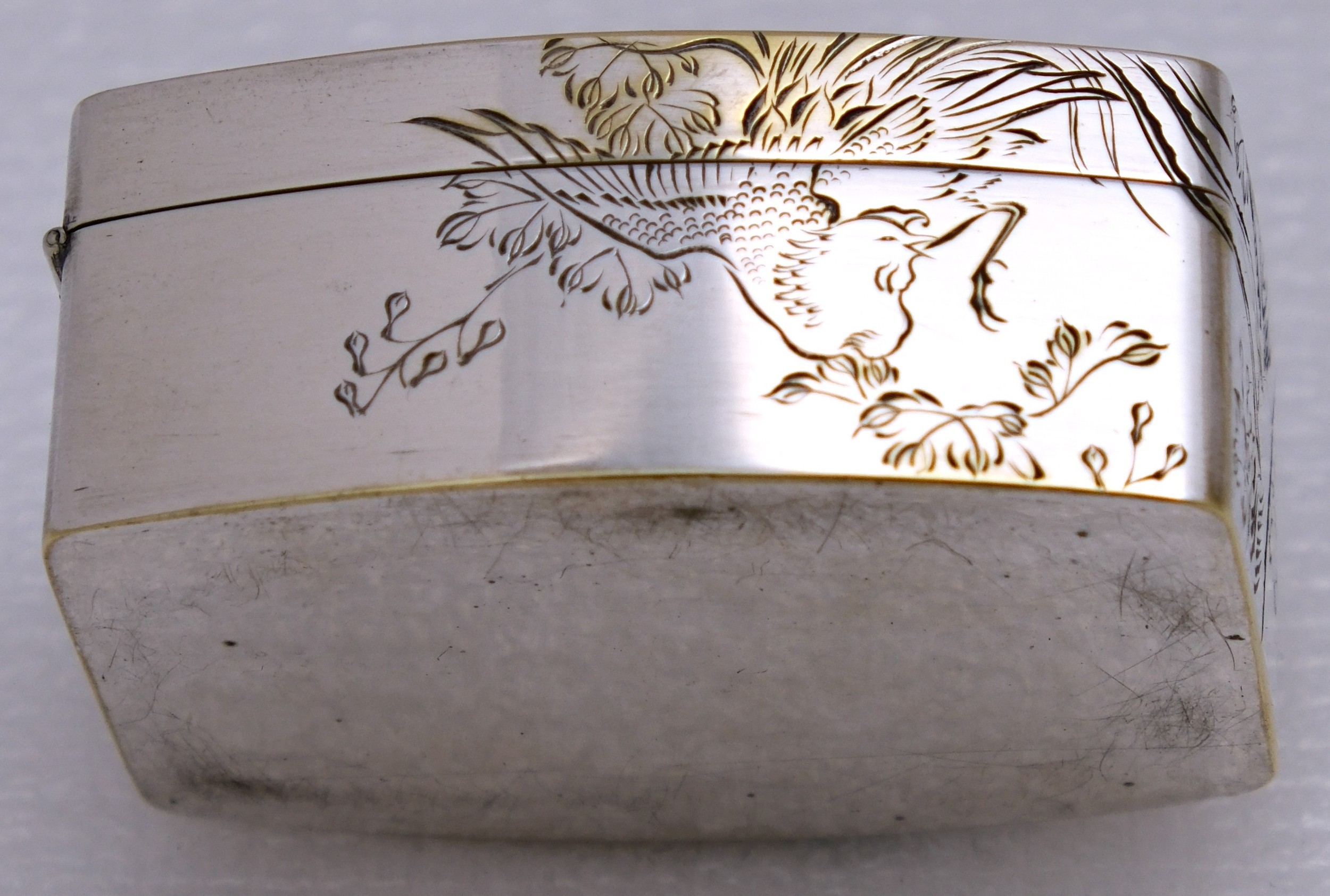
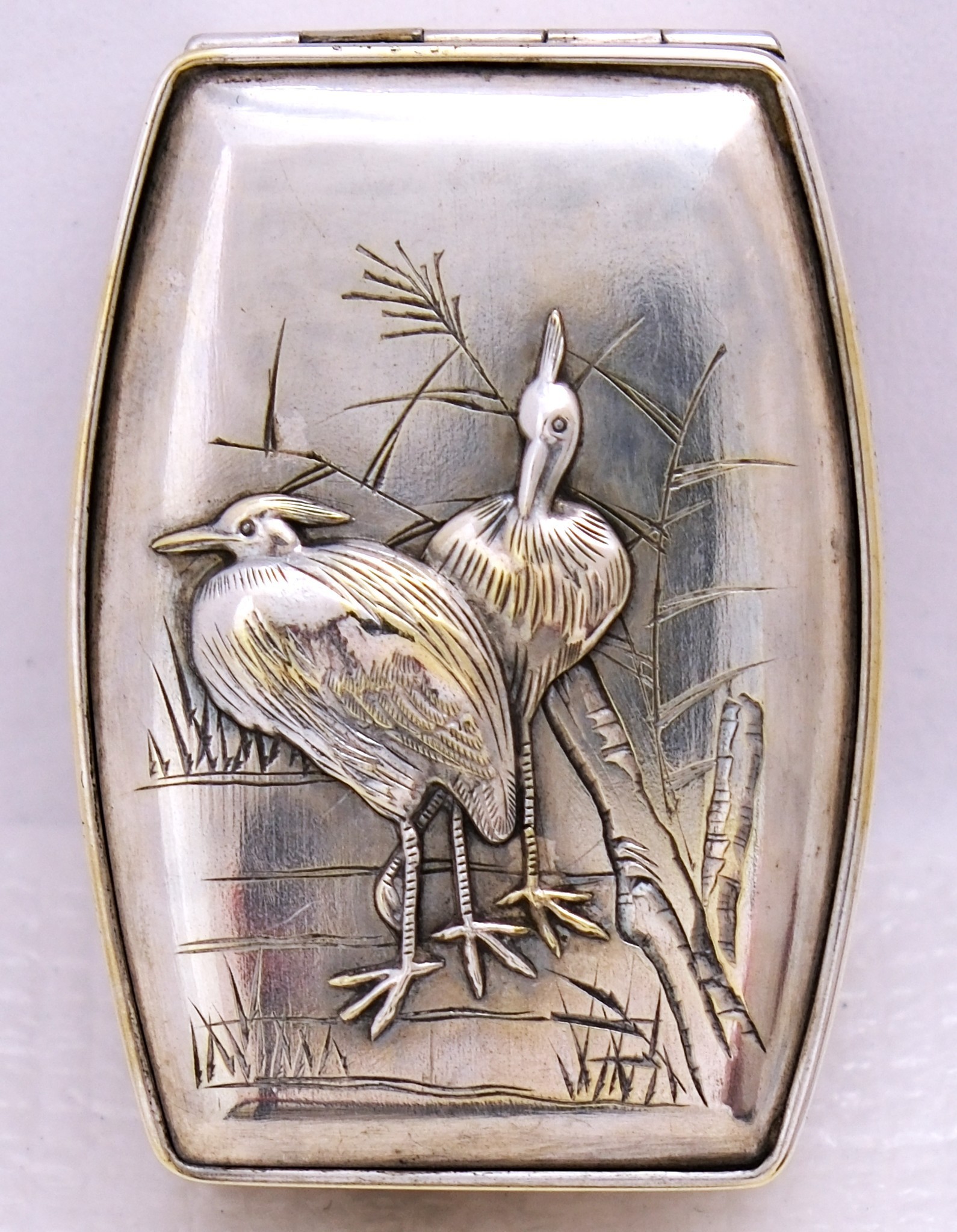
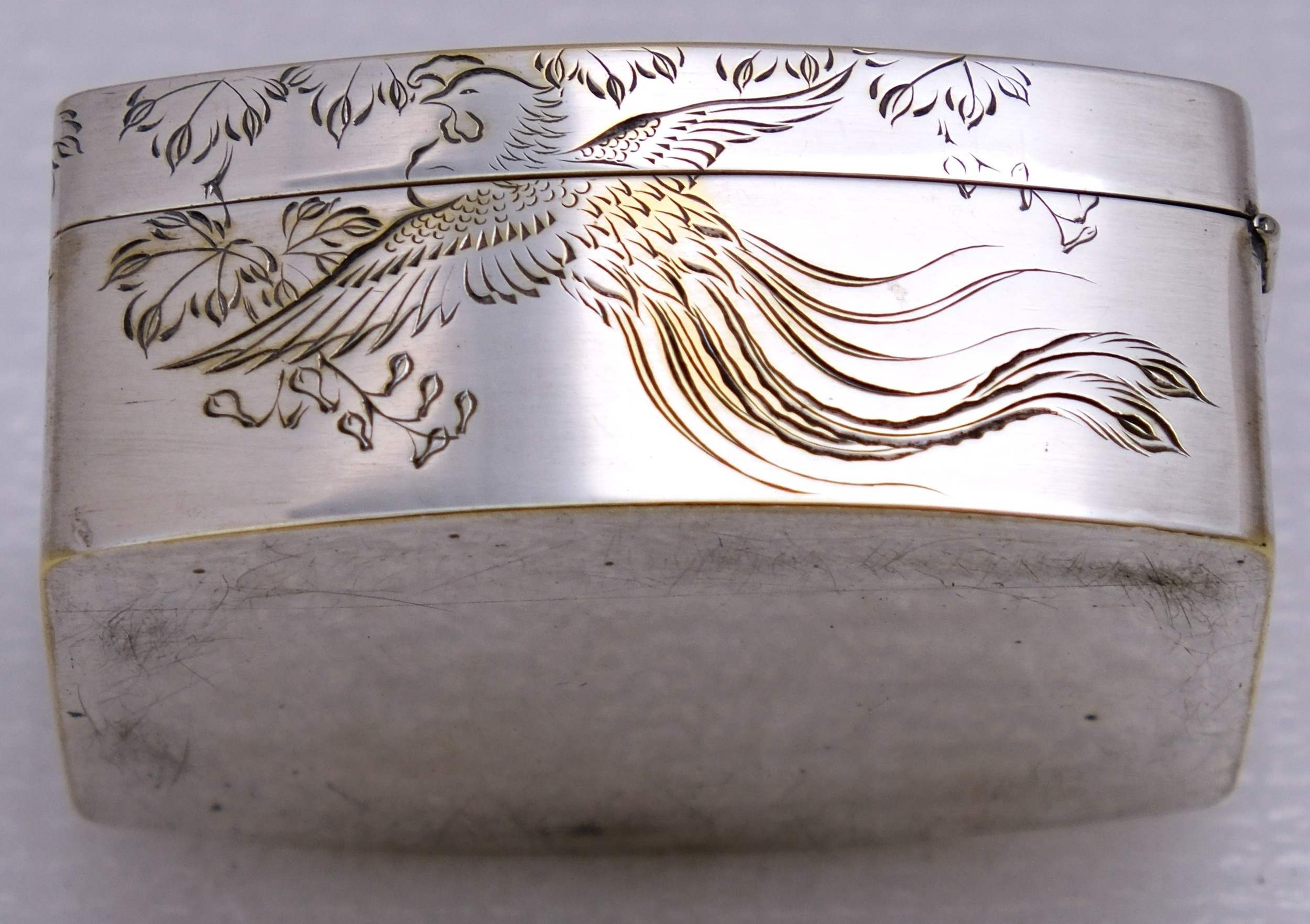
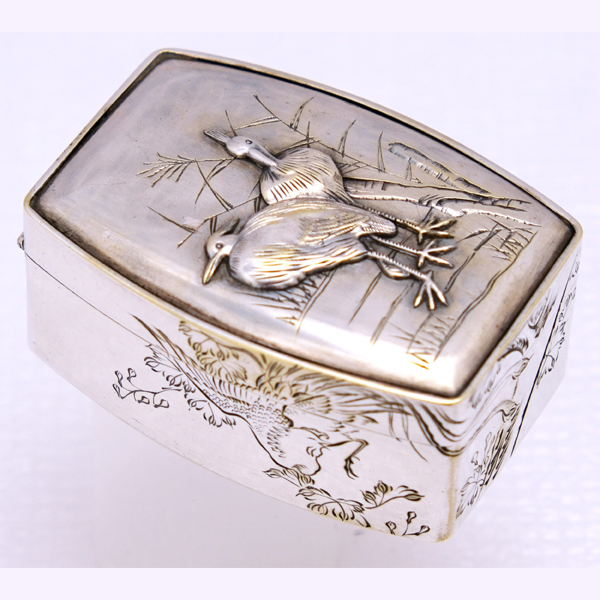
A fine japanese silvered metal box late meiji period, the cover finely decorated in relief with two egrets, the sides with engraved decoration of birds and foliage
Meiji period silvered and solid silver boxes (1868–1912) are masterworks of Japanese metalcraft created during an era when the shift away from samurai swords led master armorers to apply their skills to decorative arts
Condition: Very fine. No damage or repair.
Dimensions: 6.5cm wide
Provenance: From The Alan Bostock Collection of Japanese Cloisonné and Works of Art
SOLD
Japanese Meiji period silver and silvered-metal boxes represent a pinnacle of decorative metalwork born from a time of massive national transition. Following the 1868 Meiji Restoration and the subsequent abolition of the samurai class, highly skilled armorers and sword-fitting makers redirected their expertise toward luxury export goods. Master metalworkers utilized their mastery of traditional casting, hammering, and patination to create exquisite small containers, such as incense boxes (kogo) and trinket cases, destined for Western clientele.
These objects typically feature pure silver-often stamped with the jungin (pure silver) mark—or specialized copper-silver alloys like shibuichi, which provided a muted gray canvas. Artisans applied complex mixed-metal inlay techniques (iro-e takazogan and zogan), combining gold, silver, copper, and shakudo to render breathtaking pictorial scenes. The surface decoration of these boxes frequently showcased naturalistic motifs, including cascading wisteria, blossoming irises, cranes, and dragons in high relief.
The aesthetic appeal of Meiji silvered boxes lies in their brilliant synthesis of traditional Japanese sensitivity to nature and the structural demands of Western utility. Techniques like katakiribori (pictorial chisel engraving that mimics brushstrokes) allowed craftsmen to achieve painterly depth on hard metal surfaces. Furthermore, many of these boxes were lined with fine aromatic woods such as cedar or rosewood, maintaining an internal connection to traditional Japanese material culture while presenting a dazzling exterior to global markets.
Exhibited widely at international expositions, these metalwork masterpieces captivated Western collectors during the height of the Japonisme movement. Today, Meiji silver and silvered boxes remain highly prized by institutions and private collectors alike as monuments to chozetsugiko—the transcendent technical skill of Meiji-era artisans. They stand as enduring testaments to a pivotal epoch where traditional craft survived modernization by reinventing itself for an international stage.
© Minerva Antiquities 2026 All rights reserved
Powered by w3.css