|
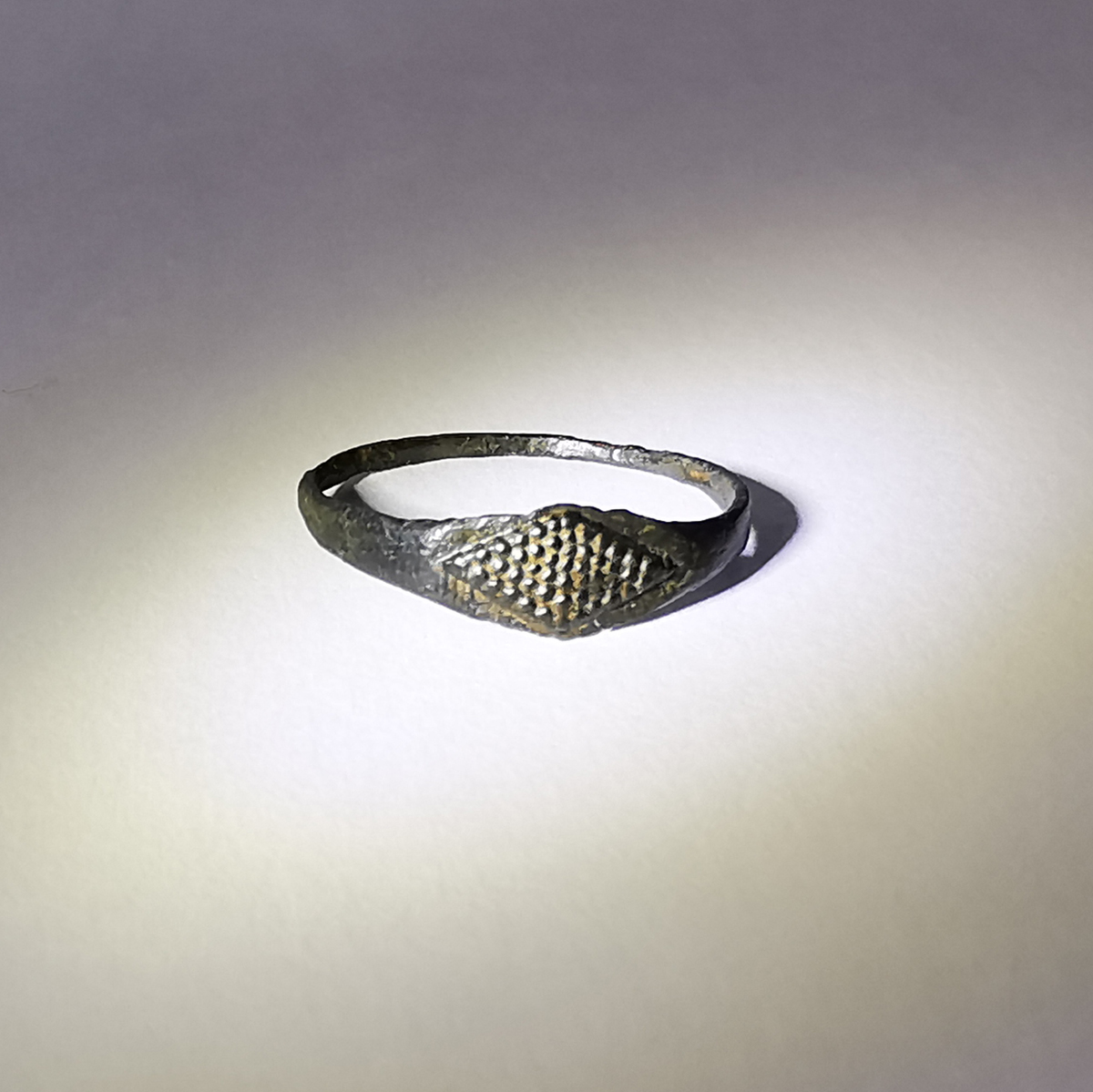
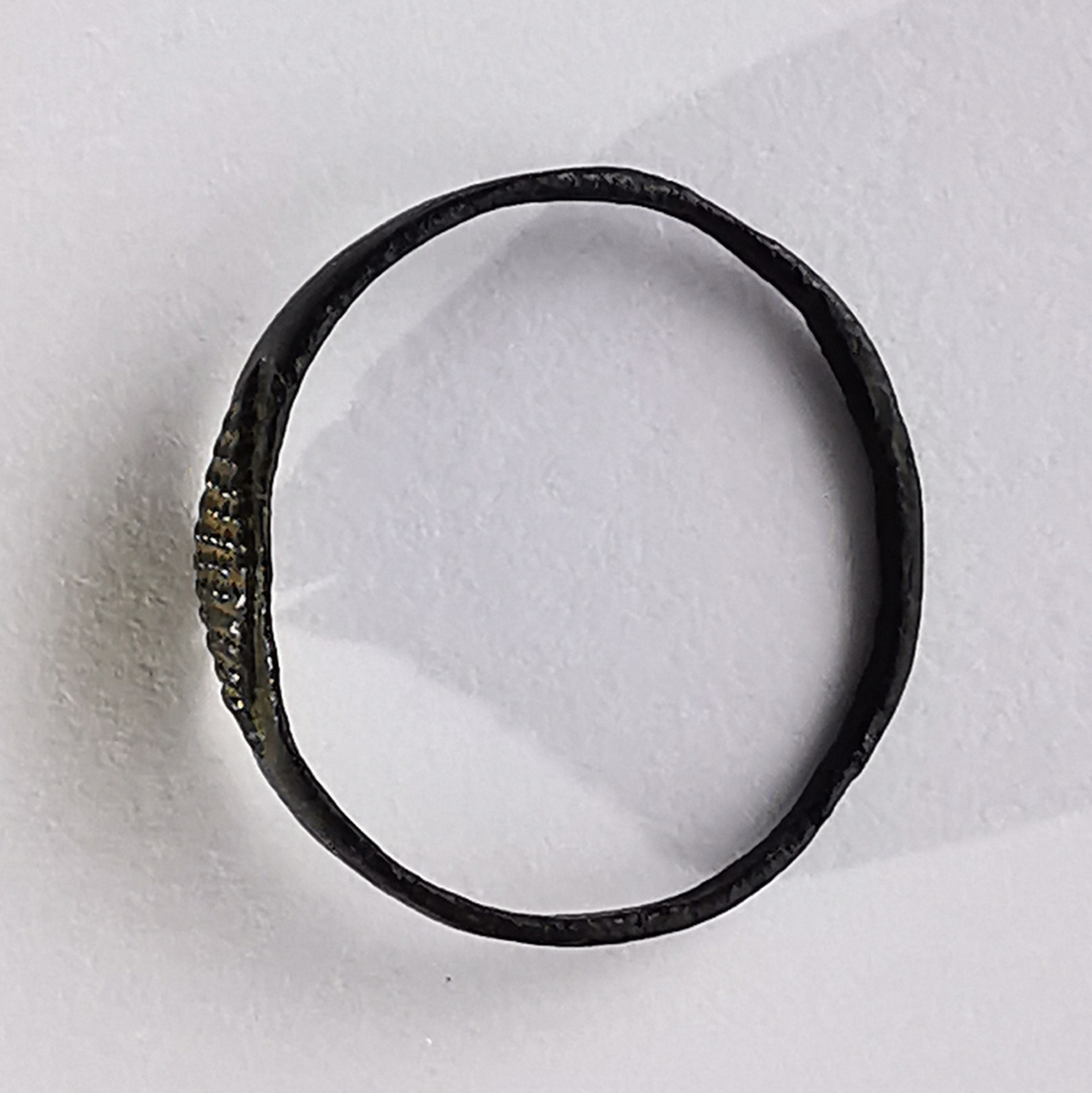
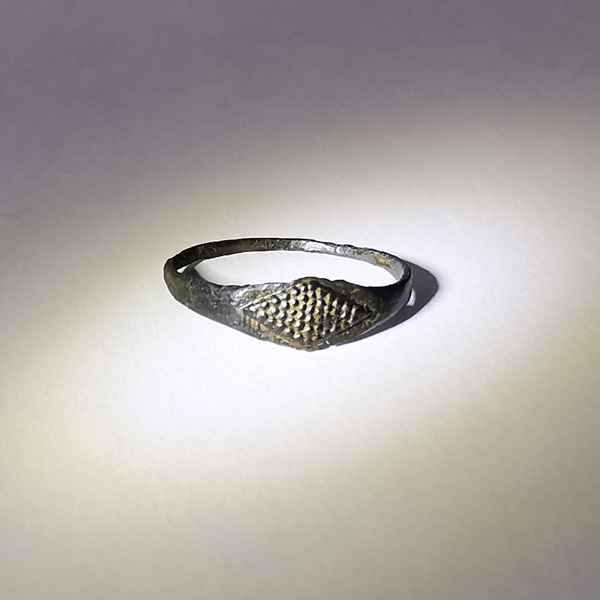
A very rare form of Romano-British bronze ring, the triangular bezel decorated with an embossed dots design.
Another of Don Lee's collection of fieldwalking finds.
Condition: The bezel design is in almost pristine condition, the raised dots presumably preserved from the elements. The band is complete.
Dimensions: Dia 17mm (inner)
Provenance: Ex. Don Lee Collection, UK; formed between 1950 - 2007.
Don Lee was a prolific collector of antiquities and coins. A former school teacher from London, Don made some remarkable finds himself, including a fabulously rare Wuneetton type gold thrymsa while 'mudlarking' on the banks of the river Thames at the age of 76! His collection spanned thousands of years from Stone Age axe heads to Roman glass and Viking brooches. His collection of coins and antiquities was auctioned in the summer of 2007.
*Overseas buyers* this item may require a UK export license. This process incurs no additional cost to the buyer. Please contact me before purchasing, so that I can advise you of the export/import requirements, timescales and shipping that will apply.
£40.00
Romano-British finger rings represent a complex cultural synthesis between indigenous Iron Age artistic traditions and the formal administrative, religious, and social structures of the Roman Empire within the province of Britannia. Emerging following the Roman conquest in AD 43, these artifacts functioned as personal ornaments, markers of legal and social hierarchy, protective amulets, and functional tools across urban centers, military installations, and rural settlements.
The material composition of these rings reflected a strict socio-economic and legal stratification. While elite administrators, wealthy landowners, and military officials wore rings forged from gold or silver—often set with imported intaglio gems or classical motifs—the broader Romano-British populace predominantly utilized copper-alloy, iron, bone, or jet. In domestic and administrative contexts, specialized designs such as ring-keys doubled as functional instruments for locking household chests and storage jars, while signet rings stamped wax to validate commercial transactions and legal agreements.
Iconographically and typologically, these objects captured the dual identity of the provincial population. Classic Mediterranean designs—including snake-headed hoops symbolizing healing, fede or hand-clasping motifs denoting marital commitment, and explicit phallic symbols functioning as apotropaic charms for children—sat alongside indigenous Celtic artistic revivals. Notable discoveries such as the Thetford Hoard and the distinctive Brancaster-type rings of the fourth and fifth centuries demonstrate how local artisans blended classical deities with native stylized aesthetics and early Christian symbols like the Chi-Rho monogram.
In the late Roman and early post-Roman transition periods (late fourth to fifth centuries), the social biography of ring manufacture shifted markedly. Escalating economic changes and material scarcity led to widespread recycling, including the cutting down of copper-alloy bracelets into smaller finger rings found across late British settlements and early Anglo-Saxon graves. These final transformations illustrate the gradual evolution of material culture as the centralized Roman administration receded and new regional identities took shape.
© Minerva Antiquities 2026 All rights reserved
Powered by w3.css