|
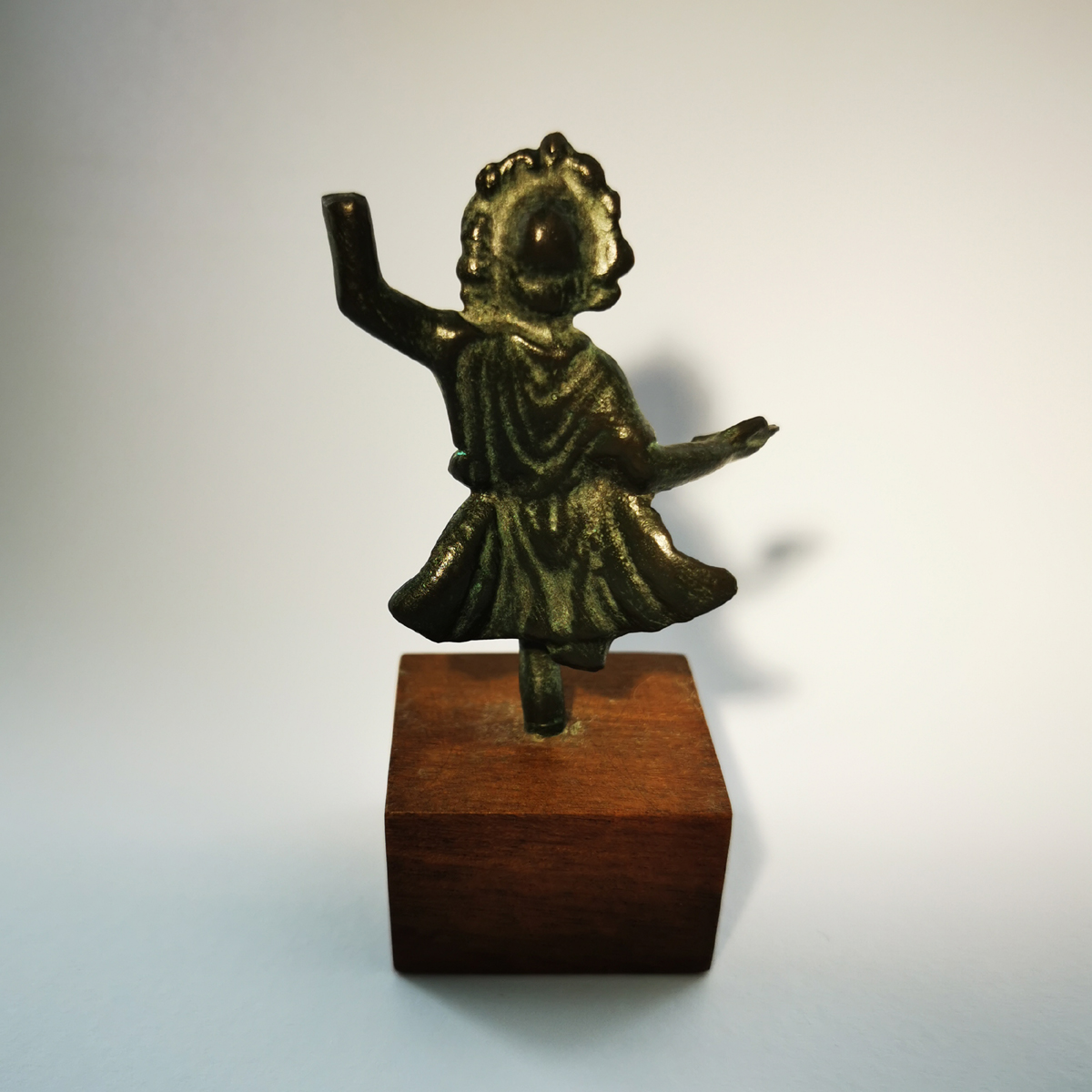
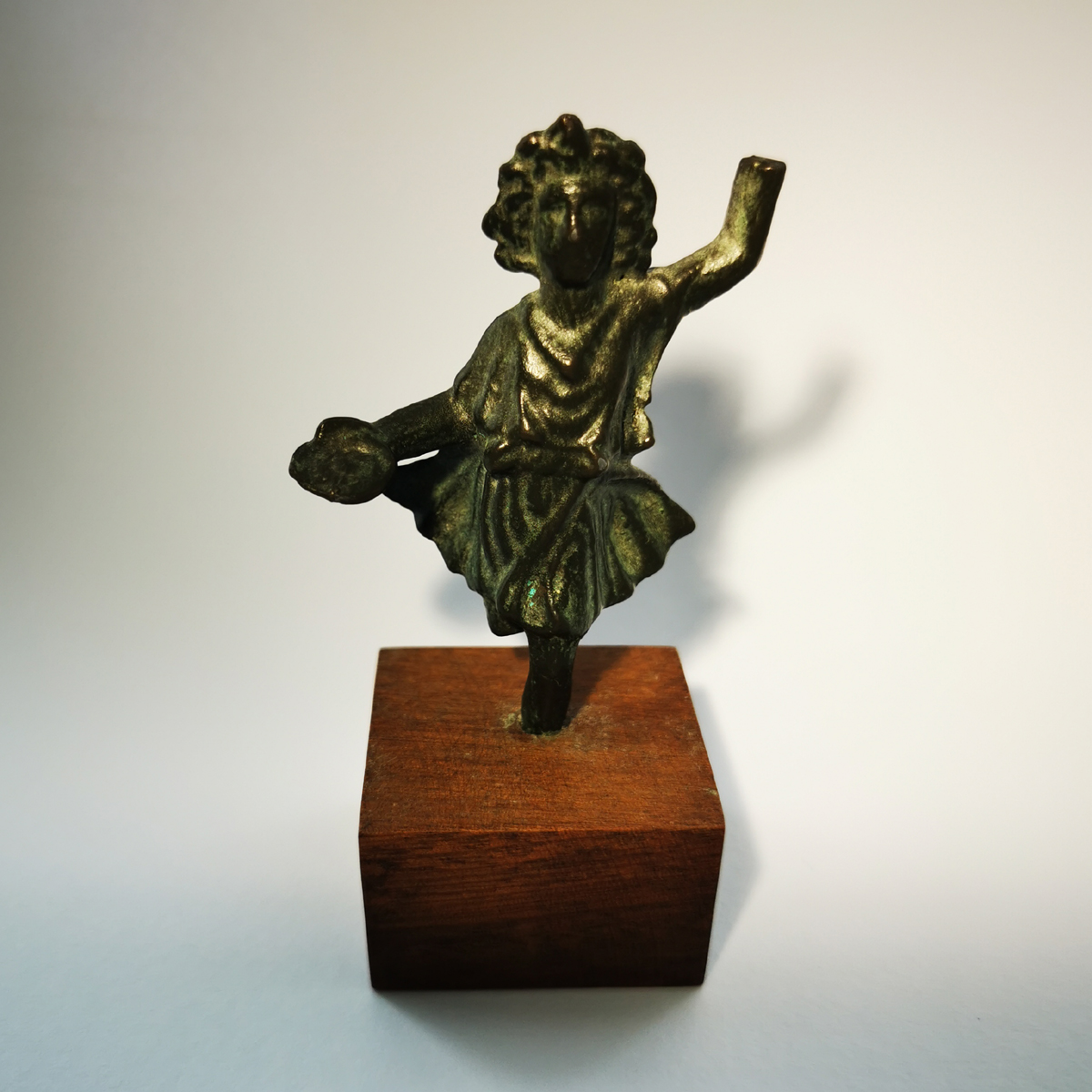
A charming cast bronze figure of the household god Lar, in dramatic motion, arm raised, striding forward, with his cloak and hair flowing.
This figure of a Lar represents one of the most common household deities in ancient Roman religion. Lares were protective spirits of the home and family, often associated with ancestors or local spirits of the land. Typically, these statuettes were placed in a family’s lararium, a small household shrine, and were central to daily rituals that invoked protection and prosperity. The figure of a Lar is usually depicted as a youthful male wearing a short tunic, often holding a cornucopia or a drinking horn, symbolizing abundance and well-being.
Condition: Fine, with a deep olive-green patina. The proportions are excellent. Missing left hand and right leg.
Dimensions: 10cm (with plinth) x 5cm.
Provenance: Ex. private collecton, UK.
£300.00
Traditional Roman households owned at least one protective Lares-figure, housed in a shrine along with the images of the household's penates, genius image and any other favoured deities. Their statues were placed at table during family meals and banquets. They were divine witnesses at important family occasions, such as marriages, births, and adoptions, and their shrines provided a religious hub for social and family life. Individuals who failed to attend to the needs of their Lares and their families should expect neither reward nor good fortune for themselves. In Plautus' comedy Aulularia, the Lar of the miserly paterfamilias Euclio reveals a pot of gold long-hidden beneath his household hearth, denied to Euclio's father because of his stinginess towards his Lar. Euclio's own stinginess deprives him of the gold until he sees the error of his ways; then, he uses it to give his virtuous daughter the dowry she deserves, and all is well.
Responsibility for household cult and the behaviour of family members ultimately fell to the family head, the paterfamilias, but he could, and indeed should on certain occasions properly delegate the cult and care of his Lares to other family members, especially his servants. The positioning of the Lares at the House of Menander suggest that the paterfamilias delegated this religious task to his villicus (bailiff).
Care and cult attendance to domestic Lares could include offerings of spelt wheat and grain-garlands, honey cakes and honeycombs, grapes and first fruits, wine, and incense. They could be served at any time and not always by intention; in addition to the formal offerings that seem to have been their due, any food that fell to the floor during house banquets was theirs. On important occasions, wealthier households may have offered their own Lares a pig. A single source describes Romulus' provision of an altar and sacrifice to Lares Grundules ('grunting lares') after an unusually large farrowing of 30 piglets. The circumstances of this offering are otherwise unknown, Taylor conjectures the sacrifice of a pig, possibly a pregnant sow.
© Minerva Antiquities 2026 All rights reserved
Powered by w3.css