|
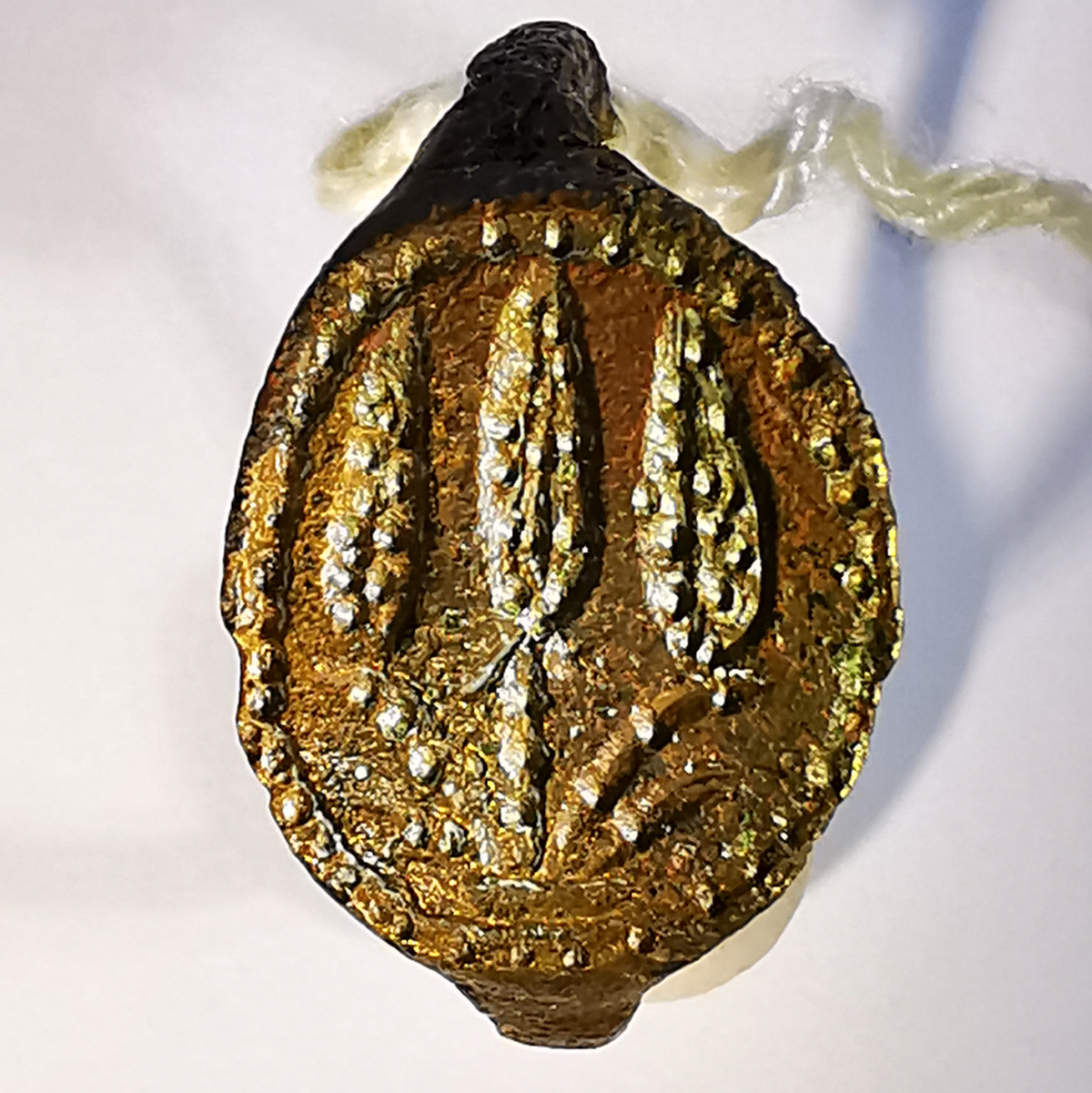
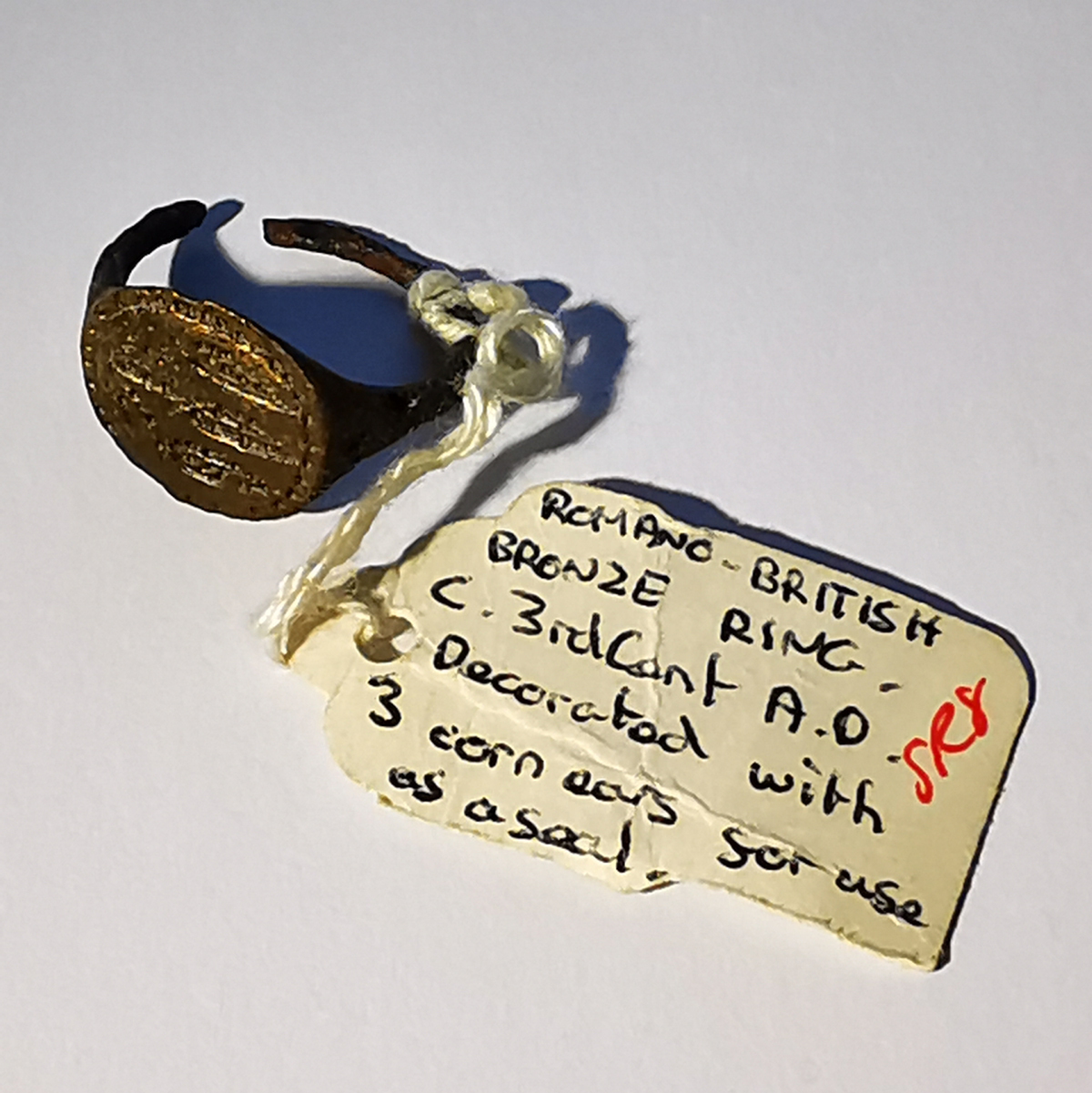
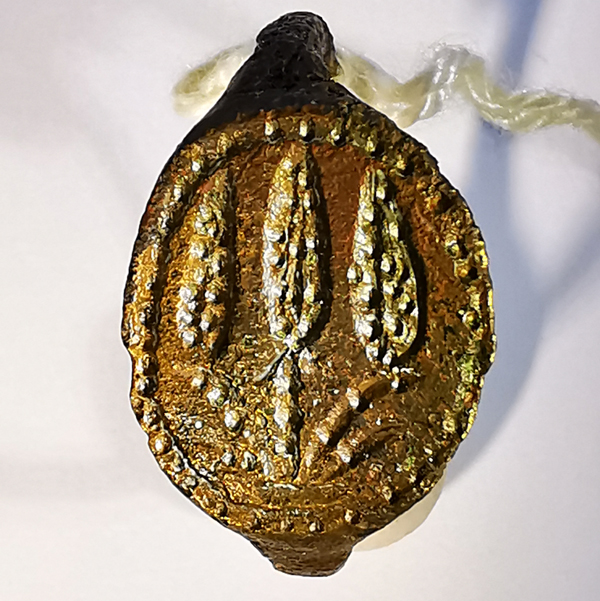
A Romano-British bronze seal ring with three ears of corn on the bezel (a symbol of the Goddess Ceres). C. 3rd Century A.D.
One of Don Lee's many fieldwalking finds. Would love to know where he found it. A one-off.
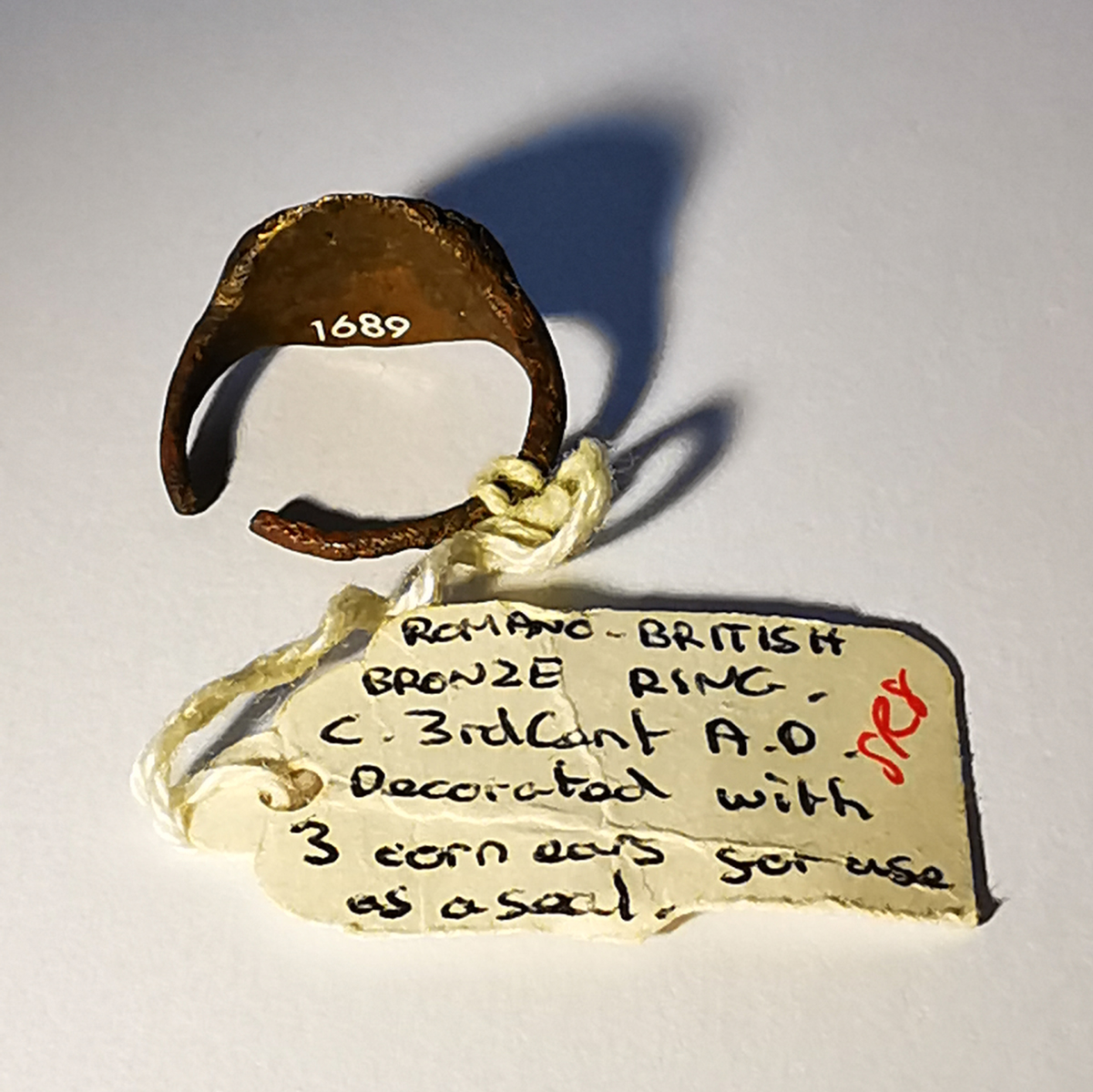
Condition: A very clear depiction of the ears of corn on a lovely golden bronze burnished bezel. Band unfortunately broken, likely as an offering to the God. Could be rejoined.
Dimensions: Dia 20mm.
Provenance: Ex. Don Lee Collection, UK; formed between 1950 - 2007.
Don Lee was a prolific collector of antiquities and coins. A former school teacher from London, Don made some remarkable finds himself, including a fabulously rare Wuneetton type gold thrymsa while 'mudlarking' on the banks of the river Thames at the age of 76! His collection spanned thousands of years from Stone Age axe heads to Roman glass and Viking brooches. His collection of coins and antiquities was auctioned in the summer of 2007.
*Overseas buyers* this item may require a UK export license. This process incurs no additional cost to the buyer. Please contact me before purchasing, so that I can advise you of the export/import requirements, timescales and shipping that will apply.
£45.00
Ceres was the ancient Roman goddess of agriculture, grain crops, fertility, and maternal relationships. As a central deity in the Roman pantheon, she was the daughter of Saturn and Ops, the sister of Jupiter, and the mother of Proserpina. While she was extensively Hellenised and conflated with the Greek goddess Demeter, Ceres retained a distinct identity deeply rooted in Rome’s civic identity, legal codes, and agricultural foundations. Her name itself serves as the etymological root for the modern word "cereal," reflecting her eternal association with cultivated grains.
In Roman state religion, Ceres functioned as a vital link between the plebeian (commoner) class and the agrarian economy. Her cult was famously centered at the Aventine Triad temple, where she was worshipped alongside Liber and Libera. This temple served not only as a religious hub but also as a political stronghold for the plebeian tribunes, who managed Rome's grain distribution (annona). Consequently, Ceres was unique among Roman deities for her dual role as both a protector of the earth's natural abundance and a champion of plebeian liberty and political rights.
The mythological narrative of Ceres is dominated by the abduction of her daughter, Proserpina, by Pluto, the god of the underworld. In her grief and fury, Ceres withdrew her blessings from the earth, causing a devastating drought and famine. This myth served as an etiological explanation for the changing seasons: the earth bloomed during the months Proserpina spent with her mother, and fell dormant when she returned to the underworld. Beyond explaining nature, this myth underscored Ceres's domain over transition, motherly devotion, and the delicate balance between life, death, and rebirth.
Ceres's veneration was institutionalised through major public festivals and legal protections. The Cerealia, celebrated annually in mid-April, featured horse racing, theatrical performances, and rituals designed to ensure a bountiful spring harvest. Furthermore, Ceres was unique in her role as a guardian of civic transitions and boundaries. Roman law invoked her to punish those who unlawfully moved boundary stones or damaged crops, placing offenders under a religious curse (sacratio). Through these diverse functions, Ceres bridged the gap between raw nature and structured civilization, ensuring both the physical survival and the moral order of the Roman state.
© Minerva Antiquities 2026 All rights reserved
Powered by w3.css