|
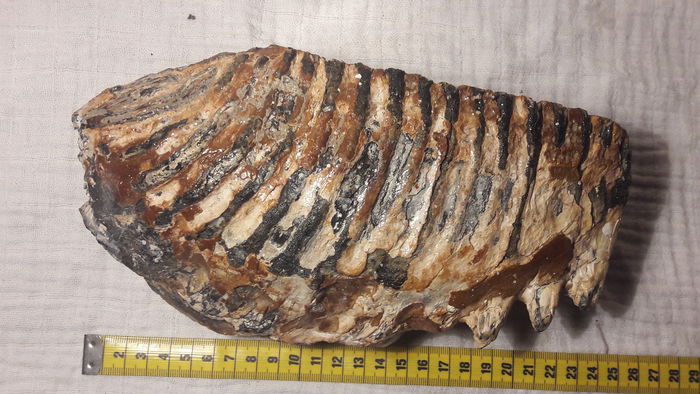
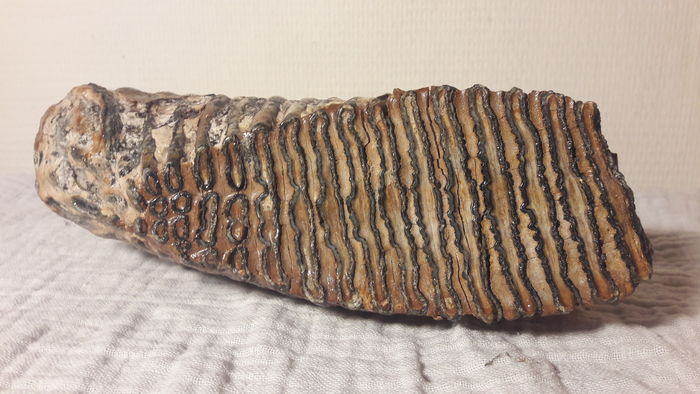
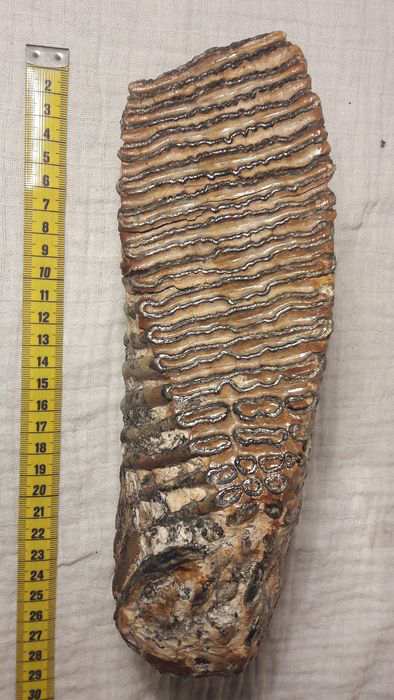
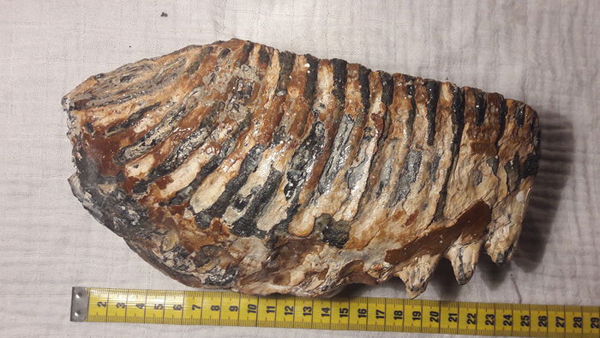
A large fossil Mammoth molar surfaced from the North Sea, in excellent, well-preserved condition, with a beautiful chewing surface
Mammoth teeth dredged from the prehistoric landscape of Doggerland offer a fascinating glimpse into the region's Ice Age past. These remarkable fossils are sometimes scooped up by North Sea fishermen and provide invaluable insights into the extinct creatures that once roamed the ancient plains.
Condition: A fine example.
Dimensions: 23cm long, 12cm high and 7cm wide. Weight 2.2 kilograms.
Provenance: Ex. Kerkweg collection (Netherlands)
£395.00
Woolly mammoths were massive ice-age herbivores that roamed Doggerland—the prehistoric landmass that once connected Great Britain to mainland Europe across the southern North Sea. Today, their remains are frequently dredged up from the seafloor.
During the Pleistocene epoch, Doggerland was bounded by ice walls to the north but featured a lush, temperate river-and-marshland ecosystem that supported massive megafauna. Along with woolly mammoths, this fertile area sustained herds of horses, bison, elk, and giant predators. Early human hunter-gatherers and Neanderthals shared this landscape with mammoths, relying on the megafauna for sustenance, with bones and hides used to construct structures.
The North Sea - and specifically areas like the Dogger Bank, Brown Bank, and coastal waters near the Netherlands -acts as an underwater fossil graveyard. For over a century, local fishing trawlers have pulled up prehistoric artifacts alongside thousands of decayed mammoth bones, teeth, and tusks. One of the most famous specimens is a massive bull mammoth skull. Discovered by Dutch fishermen and assembled from 27 fragments, it is now housed at the Celtic and Prehistoric Museum in Ventry, Ireland.
© Minerva Antiquities 2026 All rights reserved
Powered by w3.css